Alligator mississippiensis (American Alligator)
Alligator sinensis (Chinese Alligator)
Caiman latirostris (Broad-snouted Caiman)
Melanosuchus niger (Black Caiman)
Paleosuchus palpebrosus (Dwarf Caiman)
Paleosuchus trigonatus (Smooth-fronted Caiman)
Crocodylus acutus (American Crocodile)
Crocodylus halli (Hall’s New Guinea Crocodile) Southern New Guinea. Specimens in US collections.
Crocodylus intermedius (Orinoco Crocodile)
Crocodylus johnstoni (Johnstone’s Crocodile, Australian Freshwater Crocodile)
Crocodylus mindorensis (Philippine Crocodile)
Crocodylus moreletii (Morelet’s Crocodile)
Crocodylus niloticus (Nile Crocodile)
Crocodylus novaeguineae (New Guinea Crocodile) Northern New Guinea. None in the US.
Crocodylus palustris (Mugger Crocodile)
Crocodylus porosus (Saltwater Crocodile)
Crocodylus rhombifer (Cuban Crocodile)
Crocodylus siamensis (Siamese Crocodile)
Crocodylus suchus (West African Crocodile)
Mecistops cataphractus (West African Slender-snouted Crocodile) West Africa. In the U.S.
Mecistops leptorhynchus (Central African Slender-snouted Crocodile) Central Africa. None in the U.S.
Crocodilians of the World
Click on any name to navigate to that page.
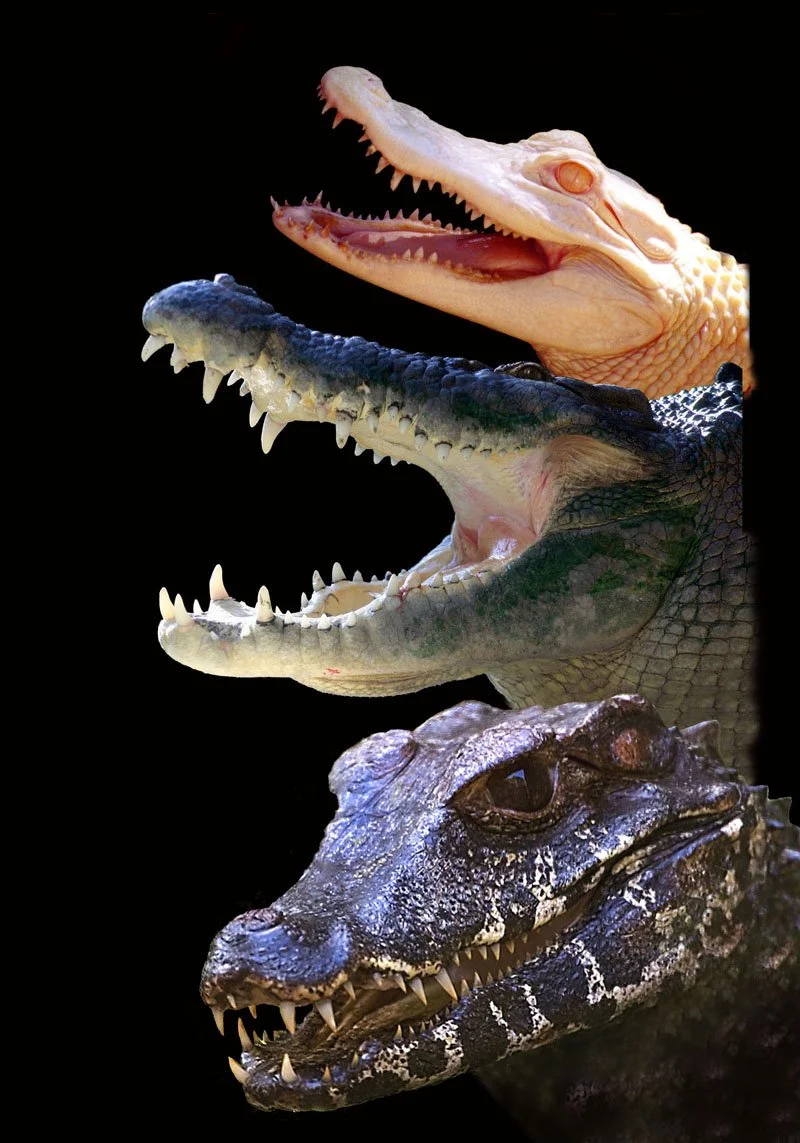
“Crocodilians” is a term used to refer to all alligators, caiman, crocodiles, and gharial. Crocodilians are carnivorous, semiaquatic reptiles with four legs, a muscular tail, and varying degrees of bony armor. They have four toes on their back feet and five toes on their front feet. There is webbing between the toes to facilitate swimming, but this webbing is variable between species. They have eyes, ears, and nostrils on top of their heads. They have large non-overlapping scales and armored plates called osteoderms, which are bone, but are not connected to the rest of the skeleton. They have conical teeth and the larger crocodilians have the most powerful bite of any animal on the planet.